OKX-ICE co-chair Andrew Cuomo calls corporate objections a ‘natural response’ to tokenized stock plans
- OKX-ICE co-chair Andrew Cuomo called issuer objections to tokenized stock trading a “natural response,” saying companies were expected to take a wait-and-see approach.
- Sixteen companies, including Microsoft, Alphabet and Goldman Sachs, have objected to trading on the planned venue under the SEC’s experimental framework.
- Securitize and Vertalo executives said issuers need answers about pricing, investor protections, custody and shareholder rights as the new markets develop.
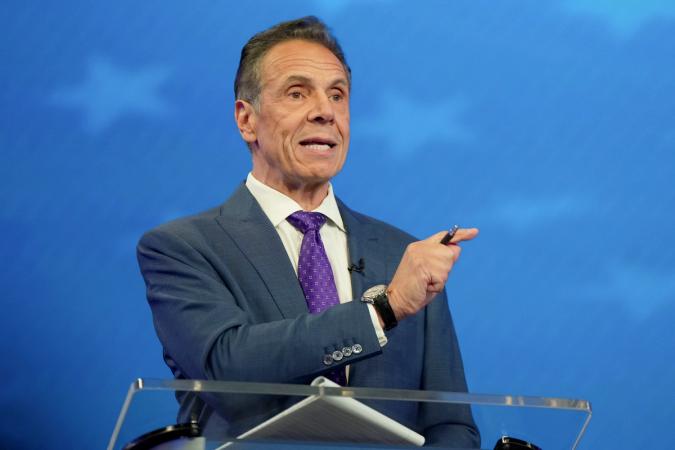
A growing list of companies rejecting tokenized trading of their shares is an expected part of testing a new market structure, Andrew Cuomo, co-chairman of the OKX-ICE joint venture, said after Microsoft, Alphabet and Goldman Sachs joined the objectors.
“This is a very natural response,” Cuomo, an OKX board member and former New York governor, said during a press call on Tuesday. “The model was designed to give companies the right to determine whether they want to opt in or opt out.”
“We always anticipated that, because this is such a dramatic and revolutionary change, many companies would want to wait and see how it goes rather than be the first to participate,” he added.
His remarks followed a Monday public notice showing 16 companies had objected to having tokenized versions of their shares traded on OKXICE, the planned venue from crypto exchange OKX and New York Stock Exchange parent Intercontinental Exchange (ICE).
Seven newly disclosed objectors — Microsoft, Alphabet, Goldman Sachs, Qualcomm, Caterpillar, McDonald’s and Western Digital — joined companies including Broadcom, Verizon and UnitedHealth.
The objections offer an early look at how companies are navigating a new market structure that could let U.S. investors trade stocks around the clock on blockchain plumbing. The SEC’s five-year “Innovation Exemption,” rolled out roughly a month ago, gives qualifying venues room to test trading through automated market makers and liquidity pools, while giving issuers a say in whether their shares participate.
Cuomo described that approach as a deliberately limited experiment, with caps on the number of stocks and trading volumes.
“There are limits on how many companies can participate and on the volume that can be traded, so by definition, it really is a sandbox — a model demonstration,” he said.
A learning curve for issuers
Carlos Domingo, CEO of tokenization firm Securitize, also said issuers’ concerns warrant attention.
“We think it's entirely reasonable for issuers to ask questions about how these new markets work, particularly around pricing, investor protections and shareholder rights,” Domingo said.
Securitize earlier this month announced an offering of 12 tokenized stocks for U.S. investors, with plans to make them available on OKXICE’s venue. Microsoft and Alphabet are among those stocks. Their objections to OKXICE do not, by themselves, establish opposition to Securitize’s separate offering.
Dave Hendricks, CEO and founder of Vertalo, an SEC-registered digital transfer agent and tokenization software platform, said the objections show the framework is functioning as intended.
“The 30-day objection window is the mechanism the SEC built in to give companies a say,” he said. “Issuers are using it.”
Hendricks also pointed to gaps in infrastructure connecting traditional exchanges with tokenized securities venues.
“Today there is no system that normalizes, harmonizes and synchronizes trading on the exchanges with trading on TSVs, and that enforces the thoughtful framework the SEC designed in the Innovation Exemption,” he said. “Until that process exists, more objections are the predictable result.”
Still, companies could reconsider as that infrastructure develops.
“It's important to note that an objection today, before the rails are in place to harmonize, may be an acceptance later.”

- 1U.S. CFTC sets agenda for AI forum, exploring trading and agentic finance6 minutes ago
- 2The Coinbase allegations expose Bitcoin's corporate governance gap4 hours ago
- 3BlackRock seeks to shield bitcoin investors from losses after rival fund weathers 50% crash6 hours ago
- 4Kazakhstan court bars Coinbase, five others from unlicensed crypto services in Astana International Financial Centre7 hours ago
- 5Microsoft, Alphabet and Goldman Sachs join objections to OKX-ICE tokenized stock trading8 hours ago
- 6France's parliament approves vote to hit stablecoin trades with 31% capital gains tax9 hours ago
- 7Equity weakness could damp demand for bitcoin after biggest ETF inflows in a month10 hours ago
- 8JPMorgan sees 10% annual bitcoin returns, topping stocks, bonds and gold over next decade10 hours ago
- 9Bitcoin drops to $81,400 as Asian chip stocks tumble, options traders seek downside protection10 hours ago
- 10Live updates: Bitcoin cuts losses as stocks edge higher11 hours ago
Beyond the Risk-Free Rate: Diversified Real World Yield in Productive Stablecoins

Beyond the Risk-Free Rate: Diversified Real World Yield in Productive Stablecoins
Diversified RWA stablecoins sustain 5-7% yield from real credit as crypto funding compresses to ~4%. GENIUS pushes yield off-chain; TAM grows to $4B in 3 years.
Diversified RWA stablecoins sustain 5-7% yield from real credit as crypto funding compresses to ~4%. GENIUS pushes yield off-chain; TAM grows to $4B in 3 years.
Why it matters:
Diversified RWA stablecoins sustain 5-7% yield from real credit as crypto funding compresses to ~4%. GENIUS pushes yield off-chain; TAM grows to $4B in 3 years.

Kazakhstan court bars Coinbase, five others from unlicensed crypto services in Astana International Financial Centre

Microsoft, Alphabet and Goldman Sachs join objections to OKX-ICE tokenized stock trading

Bitcoin ETFs just saw their biggest day in a month thanks entirely to BlackRock
Related stories
Microsoft, Alphabet, Goldman Sachs Join Growing List of Companies Objecting to Tokenized Stocks

The Midterms Are the First Real Test of Whether Markets Beat Pollsters
Alphabet, Microsoft add objections to OKX-ICE proposed tokenized stock platform